Bike parks—both lift-access and non–lift-access—are essential community resources that support rider development, outdoor recreation, and public health. As participation grows, there is an increasing need for consistent safety standards, professional instruction, and clearly defined progression pathways.
Apply Here To Be A BICP Certified Skills Park
The BICP Certified Bike Park Program formally recognizes bike parks that meet the Bike Instructor Certification Program’s (BICP) safety, instructional, and operational standards required to host instructor training and rider education. Certification confirms that a park is equipped to support structured skills development in a safe, inclusive, and professionally managed environment.
BICP worked with the International Mountain Bike Association (IMBA) to establish the first BICP-certified bike park, the Brown County Pump Track in Nashville, IN.
Why This Work Matters
As communities invest in bike parks and skills facilities, many parks lack standardized instructional frameworks, access to credentialed instructors, and clearly defined safety and progression guidelines. This can lead to inconsistent instruction, increased risk exposure, and underutilization of park infrastructure.
The BICP Certified Bike Park Program addresses these challenges by aligning bike park features with internationally recognized coaching and instructional standards. Certified parks provide a structured framework that allows BICP-certified instructors and coaches to deliver consistent, standards-based instruction for riders of all ages and abilities while supporting long-term park sustainability.
Goals for The Program
The BICP Certified Bike Park Program is designed to:
- Improve rider safety through standards-based feature design and instructional use.
- Increase access to high-quality, structured mountain bike instruction.
- Support workforce development for certified instructors and coaches.
- Strengthen community bike park infrastructure and utilization.
- Promote equitable access to safe, welcoming learning environments.
Benefits of Certification
For Riders and Communities
- Clear progression pathways that build rider confidence and long-term participation.
- Increased access to professional instruction for youth, beginners, and developing riders.
- Safer learning environments aligned with the BICP global standards for best practices.
For Park Operators and Land Managers
- Reduced risk exposure through standardized instructional frameworks.
- Increased park usage through organized programming and events.
- Alignment with IMBA and the BICP globally recognized standards.
For Local Instructors and Coaches
- Ongoing professional development within the global network of BICP-certified instructors and coaches.
- Authorized professional venues to deliver skills clinics and training.
- Economic opportunities through certification and skills clinics.
Our goal: To develop a network of BICP-certified skills parks to host BICP certification events and BICP skills clinics, and to create opportunities for newly certified instructors and coaches to grow their coaching businesses. Having a certified instructor-coach in the community creates access to world-class coaching in safe, structured riding environments.
Certification Standards
BICP Certified Bike Parks are evaluated based on their ability to support Level 1, Level 2, and Level 3 Instructor Certification Courses and skills clinics.
Certification focuses on progression, safety, and instructional usability. Many existing bike parks already meet certification requirements or can do so with minimal modifications.
Core Infrastructure Elements
Certified parks include a combination of:
- Open skills areas suitable for group instruction.
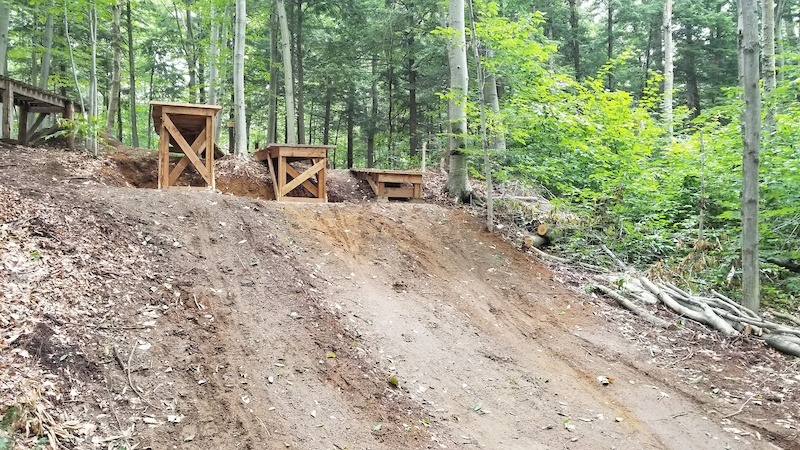
- Progressive roll-down, skinny, and drop features.
- Steep terrain suitable for controlled skills training.
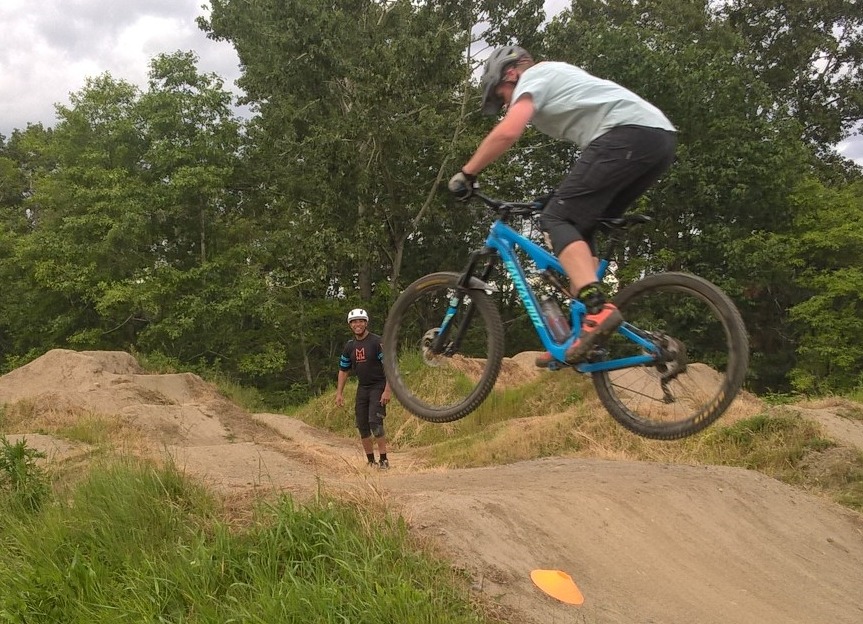
- Berms, rollers, pump tracks, and introductory jump features.
These elements allow instructors to scale instruction appropriately across ability levels and age groups.
Community Impact
Certified Bike Parks serve as regional hubs for rider education, professional training, and community engagement.
- Youth and New Riders: Lower barriers to entry and improved confidence through structured instruction.
- Local Economies: Support for instructor employment, events, and visitation.
- Park Sustainability: Increased utilization and long-term return on infrastructure investment.
Partnerships and Capacity
BICP brings over two decades of experience in instructor certification and coach education, supported by a global network of certified professionals. Through its partnership with IMBA, the program aligns with established standards for bike parks, skills areas, and ride centers.
BICP also works with industry partners, such as Momentum Trail Concepts, to provide consulting, design, and construction support for parks pursuing grant-funded feature development.
BICP can assist parks in aligning proposed improvements with IMBA grant criteria and broader public recreation goals.
Sustainability
The BICP Certified Bike Park Program is designed for long-term sustainability through:
- Ongoing instructional programming.
- Local instructor engagement and workforce development.
- Continued partnerships with national organizations.
- Increased park usage and community investment.
Invitation to Apply
If your bike park is committed to elevating instruction, improving safety, and expanding access to high-quality rider education, we invite you to apply to become a BICP Certified Bike Park and join a growing global network of parks leading the future of cycling education.
Apply Here To Be A BICP Certified Skills Park
What is Required to be a Certified Bike Park?
BICP Level 1 Skills Requirements:
- Flat open area – approximately the size of a basketball court at a minimum (40′ x 80′)
This can be grass, cement, or dirt. - A Roll Down feature – 12 inches (30 cm) high. This can be a natural feature or built to meet the height and width standards. Video example
- A Skinny features – 6”w x 8’l x 2”h, 6”w x 8’l x 4”h, 6”w x 8’l x 6”h. Video example
- Steep Terrain – 45 degrees or more, ideally 20 feet in length, with a variety of terrain examples from Beginner to Intermediate degrees of difficulty. Video example
BICP Level 2 Skills Requirements:
- Flat open area – approximately the size of a basketball court at a minimum (40′ x 80′)
This can be grass, cement, or dirt. - Multiple Roll Down features: 12 inches (30 cm) and 18 inches (48 cm) high. This can be a natural feature or built to meet the height and width standards. Video example
- A Skinny features – 6”w x 8’l x 2”h, 6”w x 8’l x 4”h, 6”w x 8’l x 6”h, 6”w x 8’l x 12”h Video example – Video example
- Steep Terrain – 45 degrees or more, ideally 20 feet in length, with a variety of terrain examples from Beginner to Intermediate degrees of difficulty. Video example
- A Basic Drop feature – 18 inches (48 cm) high. This can be a natural feature or built to meet the height and width standards. Video example
- Berm Corner and Set of Continuous Rollers – ideally a small pump track. Video example –Video example
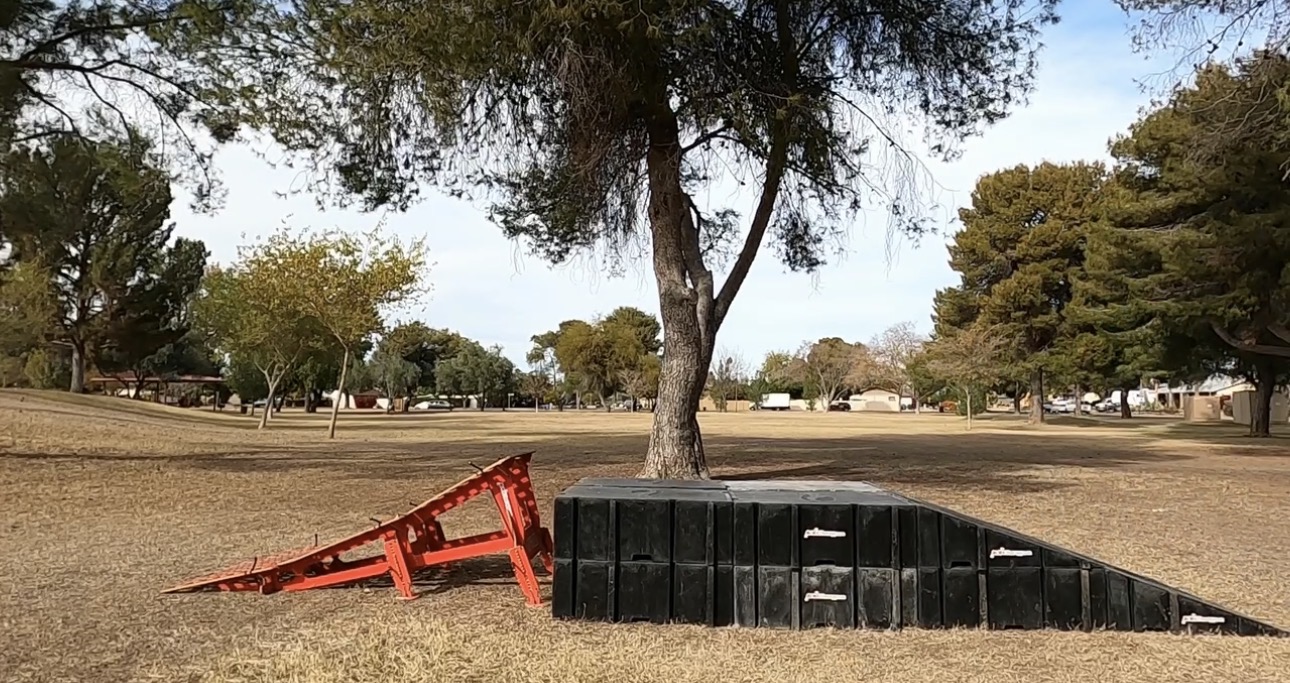
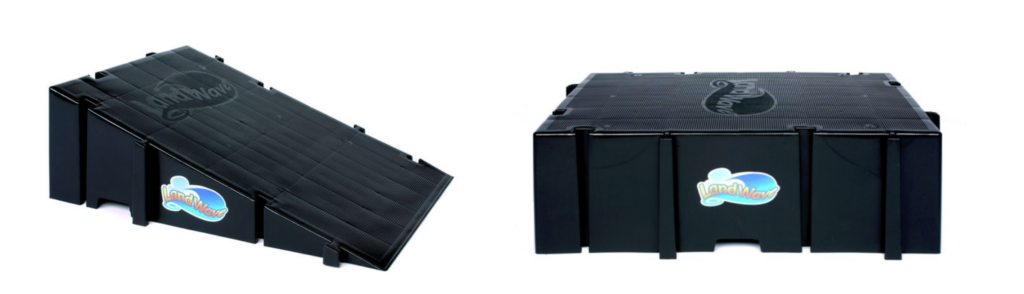
- A Basic Tabletop Jump feature – This can be dirt jumps or made using features such as hopper ramps and land wave boxes. Ideally, size not to exceed 4’h x 4’w x 1 bike length. Video example
BICP Level 3 Skills Requirements:
- Flat open area – approximately the size of a basketball court at a minimum (40′ x 80′)
This can be grass, cement, or dirt. - Multiple Roll Down features: 12 inches (30 cm), 18 inches (48 cm), and 36 inches (96 cm) high. This can be a natural feature or built to meet the height and width standards. Video example
- A Skinny features – 6”w x 8’l x 2”h, 6”w x 8’l x 4”h, 6”w x 8’l x 6”h, 6”w x 8’l x 12”h Video example – Video example
- Steep Terrain – 45 degrees or more, ideally 20 feet in length, with a variety of terrain examples from Beginner to Intermediate degrees of difficulty. Video example
- A Basic Drop feature – 18 inches (48 cm)and 36 inches (96 cm) high. This can be a natural feature or built to meet the height and width standards. Video example
- Berm Corner and Set of Continuous Rollers – ideally a small pump track. Video example –Video example
- A Basic Tabletop Jump feature – This can be dirt jumps or made using features such as hopper ramps and land wave boxes. Ideally, size not to exceed 4’h x 4’w x 1 bike length. Video example